Why You Drive on the Left in the U.S. Virgin Islands (and What It Actually Means for You)
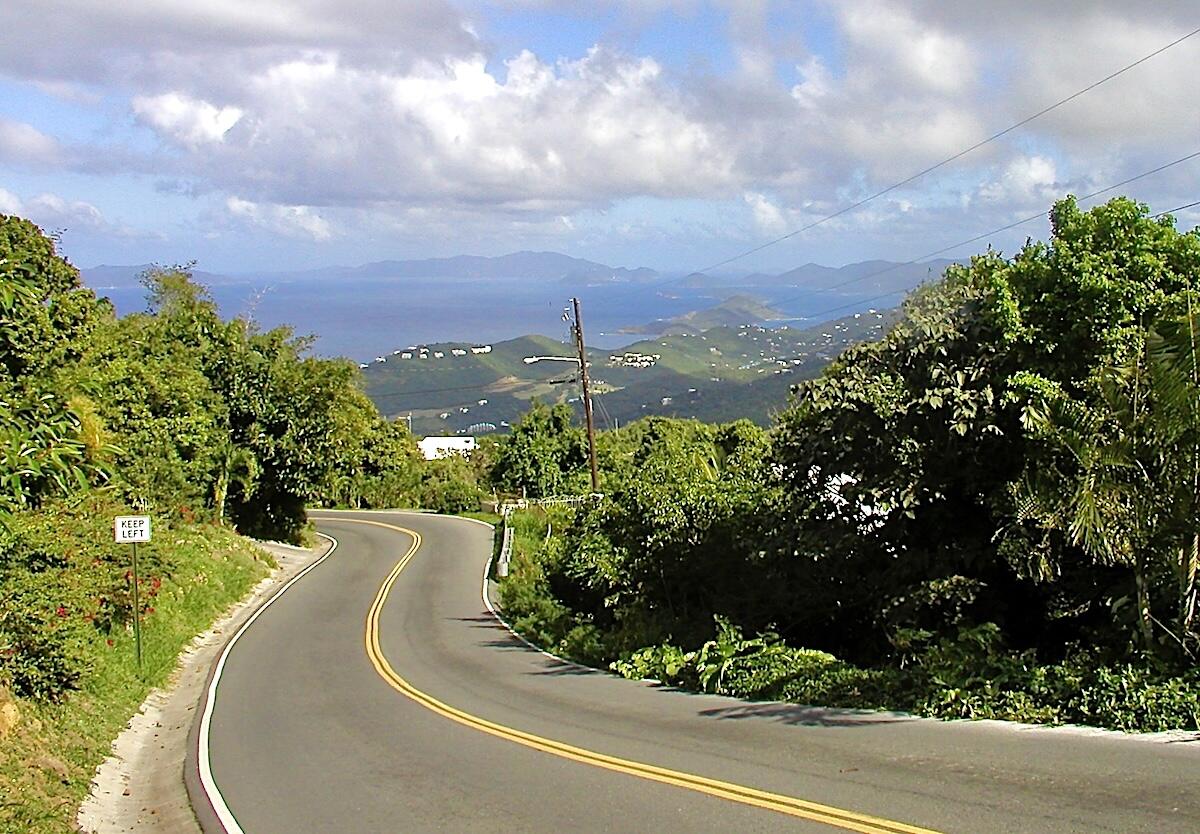
The USVI is an unincorporated U.S. territory, your driver's license from any state works here, the cars are U.S.-spec with the steering wheel on the left side — and you drive on the left side of the road. This surprises almost every first-time visitor, and it's the single most common reason for minor accidents among renters in the first day or two.
Why
The territory kept left-hand traffic from its Danish colonial period (Danish West Indies until 1917), and never switched when it became U.S. territory. It's one of the few U.S. jurisdictions where this is true.
What it actually means, practically
Your car is left-hand drive, but you drive on the left side of the road — which means the driver sits on the side farther from the centerline, not closer to it. Both of the world's two "normal" pairings put the driver nearest the centerline: right-hand traffic with a left-hand-drive car, as on the U.S. mainland, or left-hand traffic with a right-hand-drive car, as in the UK. The USVI has neither — it's left-hand traffic with a left-hand-drive car, so that pairing is reversed. The passenger seat ends up nearest oncoming traffic, and the driver ends up nearest the shoulder. That's exactly what trips people up: judging your distance from oncoming traffic is harder because you're seated on the far side of the car from it, while the pedals and gearshift feel completely normal because the car itself is a standard American layout.
Roundabouts, if you encounter any, run the opposite direction from what you're used to relative to a right-hand-traffic country.
Roads are narrow, steep, and blind-cornered, especially on St. John and St. Thomas. Combined with left-side driving, this is a worse combination than either factor alone. Go slow on unfamiliar roads, especially at night.
Practical advice for renters
- Take a few minutes in the parking lot before you pull onto a real road. Get the "stay left" instinct started somewhere low-stakes.
- Your biggest risk moment is the first turn out of a driveway or parking lot, when tired or distracted drivers default to habit and drift right.
- Narrated by locals: the most common rental mistake is not the driving itself but forgetting on a return trip after several correct days — muscle memory reverts under fatigue.
- 4WD or high-clearance is worth it outside the main towns; many secondary roads are steep, potholed, or unpaved regardless of which side you're driving on.
Frequently Asked Questions
Do you drive on the left or right in the U.S. Virgin Islands?
The left, despite the USVI being U.S. territory. It's a holdover from the islands' Danish colonial history and never changed when the U.S. purchased the territory in 1917.
Are USVI rental cars left-hand drive or right-hand drive?
Left-hand drive — standard U.S.-spec vehicles with the steering wheel on the left, same as any mainland rental car. Combined with driving on the left side of the road, this is an unusual pairing that puts the driver on the side of the car farther from oncoming traffic, which is part of what makes USVI driving feel disorienting at first.
Is it difficult for American visitors to drive in the USVI?
It takes some adjustment. The left-hand traffic paired with a familiar left-hand-drive car creates a mismatch that doesn't exist in either the mainland U.S. or the UK, and combined with narrow, steep, blind-cornered roads, it's worth taking slowly for the first day or two, especially at night.