How to Take the Passenger Ferry Between St. Thomas and St. John
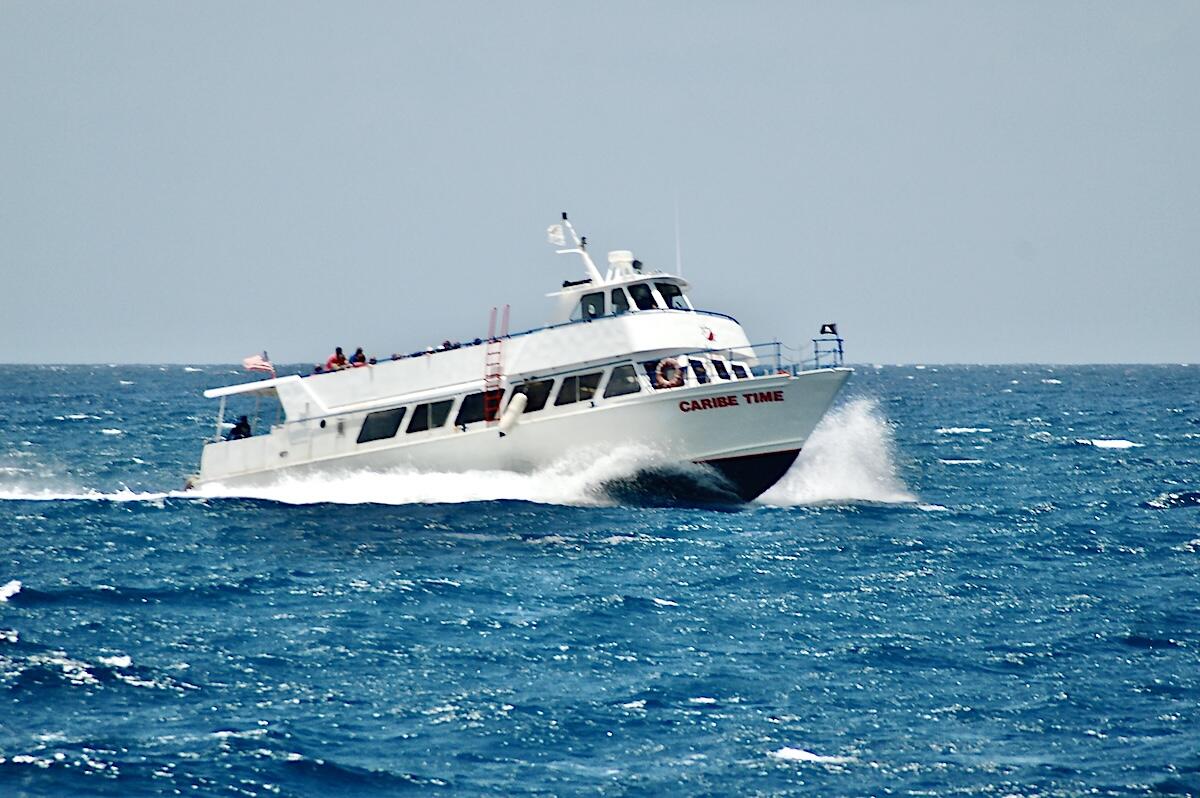
Status, September 2026: The Charlotte Amalie–Cruz Bay route is suspended. Service stopped on Sunday, August 30, 2026 and is scheduled to resume Sunday, November 1, 2026. The Red Hook–Cruz Bay route is running, but on a temporary modified schedule in effect through October 31, 2026. Check departure times with the operator before you plan around them.
If you don't need a car, this is the way to get between St. Thomas and St. John — faster, cheaper, and far more frequent than the car barge, with no queue-in-your-vehicle uncertainty. Here's what first-timers get wrong.
The two routes, and why they're not interchangeable
Red Hook (St. Thomas) ↔ Cruz Bay (St. John) — the workhorse route. Roughly 20 minutes on the water, runs year-round with departures all day, and is your default choice for anything except arriving directly from the airport or Charlotte Amalie's cruise docks.
Charlotte Amalie ↔ Cruz Bay — a longer, more scenic, far less frequent run at roughly 45 minutes, with only a handful of departures a day. It is seasonal, and the season is real: the operator suspends it over the late-summer months and restarts it on November 1. Confirm it's running before you plan around it.
Don't default to Charlotte Amalie assuming it's the "main" route because it's the bigger town — for most travelers Red Hook is faster, cheaper, and available every day of the year.
Which dock, and how to get there
Red Hook is on the east end of St. Thomas, about 25–30 minutes from Cyril E. King Airport (STT) by taxi or rental car, longer in traffic. The passenger terminal is the Urman Victor Fredericks Marine Terminal — the same complex the car barges use, but a separate docking area with its own marked entrance. If you're flying in and heading straight to St. John, budget real time for this; it is not a quick hop from the airport.
Charlotte Amalie's ferry dock is close to the airport (roughly 10 minutes) and to the cruise ship piers, which is exactly why it's the more convenient option if you're arriving by cruise or already in town — when it's running.
Fares
Both routes are ticketed through the same operation, but they're priced separately.
| One-way fare | Red Hook ↔ Cruz Bay | Charlotte Amalie ↔ Cruz Bay |
|---|---|---|
| Adult, non-resident (12+) | $8.15 | $13.00 |
| Adult, USVI resident (12+) | $6.00 | $12.00 |
| Child, 2–11 | $1.00 | $3.50 |
| Senior 60+, USVI resident | $1.50 | $6.00 |
| Infant, under 2 | Free | Free |
| Bag fee, per bag | $4.00 | $4.00 |
| Crossing time | ~20 minutes | ~45 minutes |
The child fare on the Red Hook route is the single best-value ticket in the territory. A dollar. Note the contrast with the Charlotte Amalie route, where a child costs three and a half times as much and a resident adult saves only a dollar over a visitor.
The bag rule is stricter than you think
This catches more people than the fare does. The test is whether the item fits in your lap. Anything that doesn't is a paid bag at $4 apiece.
The operator states this explicitly: the ferry's definition of a carry-on is not the airline's. A roll-aboard that sailed through as a free carry-on on your flight down is a $4 bag on the ferry. For a family arriving from the airport with checked luggage, that adds up faster than the tickets do — which is one of the few arguments for putting a vehicle on the car barge instead, since passengers and luggage ride free with the vehicle.
One more thing that isn't advertised: boarding the vessel counts as consent to screening or inspection of you and your belongings. Refusing means you don't board.
How it actually works
Unlike the car barge, this is a passenger operation with a real ticket counter — but advance purchase is available and more useful than most guides suggest.
- You can buy online, and tickets are good for ten days. The operator sells tickets in advance through an online booking system, and a purchased ticket stays valid for ten days from purchase. That makes buying your return at the same time as your outbound essentially risk-free — you're not committing to a specific return sailing.
- Walk-up still works. Buy at the booth or window at each terminal. On Red Hook–Cruz Bay, with departures running all day, advance purchase is a convenience rather than a necessity.
- Bring photo ID. It's required at terminal check-in, and it's the only way to claim a resident or senior fare.
- Boarding is quick — this isn't the vehicle-loading logistics of the car barge. Line up, board, go.
- If you're commuting, ask about commuter books. They're available on request. They're non-transferable and void if tickets are detached from the book, so they're for one person's repeated use, not for splitting across a group.
- Frequent departures on Red Hook–Cruz Bay mean a missed boat is a minor inconvenience, not the barge's stranded-overnight risk. The Charlotte Amalie route doesn't have that luxury — missing one of a handful of daily departures is a real schedule problem.
Timing and crowding
- Cruise ship days push Charlotte Amalie-route crowding up, since cruise passengers doing a St. John day trip funnel through that same small terminal.
- Weekend evenings on Red Hook–Cruz Bay get busier with St. Thomas residents and weekenders, similar in pattern to the car barge's Sunday crunch, though the frequency absorbs it better than the barge's fixed departures do.
- Early morning and late evening runs are the quietest, if your schedule allows flexibility.
- Temporary schedules happen. The route is on a modified timetable through the end of October 2026, and that isn't unusual — schedule modifications get posted at the terminal and on the operator's site with little fanfare. Confirm times the day before rather than relying on a schedule you screenshotted at home.
What this route is not for
If you need your own vehicle on St. John — for exploring, for a rental car booked on St. John, for a lot of gear — this isn't your route. See our car barge guide instead. The two exist for different jobs: passenger ferry for people and light bags, barge for the vehicle you actually need on the ground once you arrive.
Frequently Asked Questions
Do I need a reservation for the St. Thomas–St. John passenger ferry?
No, but you can buy in advance and it's worth doing. The operator sells tickets online, and a purchased ticket stays valid for ten days — so you can buy the return at the same time without committing to a specific sailing. Walk-up at the dock counter works fine too. Bring photo ID either way; it's required at check-in.
Which route should I take: Red Hook or Charlotte Amalie?
Red Hook–Cruz Bay is the default for almost everyone — it runs year-round, has departures all day, is a 20-minute crossing, and costs $8.15 for a non-resident adult. Charlotte Amalie–Cruz Bay is a 45-minute crossing at $13, with only a few departures a day, and it's seasonal. It makes sense if you're arriving by cruise ship or are already downtown, and only when it's actually running.
Is the Charlotte Amalie ferry to St. John running right now?
Not as of September 2026. Service was suspended on August 30, 2026 and is scheduled to resume November 1, 2026. This is a seasonal pattern rather than a one-off, so if you're traveling in late summer or early fall, plan on Red Hook and confirm before assuming otherwise.
What happens if I miss the last ferry?
On Red Hook–Cruz Bay, not much — departures run through the evening, so you're waiting, not stranded. On the Charlotte Amalie route, missing one of the day's few departures is a real problem, since there's no late option.
How much do bags cost on the St. John ferry?
Four dollars per bag on both routes. The test is whether the item fits in your lap — anything larger is a paid bag, and the ferry's definition of a carry-on is deliberately not the airline's. Budget for it if you're coming straight from the airport with checked luggage.
What if I have a car with me?
The passenger ferry doesn't carry vehicles. If you need a car on St. John, see our car barge guide instead — it's a separate service with its own dock, schedule, and booking system.